The unfolding legal and financial crisis involving Weiss Memorial Hospital in Chicago’s Uptown neighborhood and West Suburban Medical Center in Oak Park offers a timely illustration of why court-appointed receivers can become an important tool when an organization’s ownership, finances, operations, and public responsibilities become deeply intertwined.
In September, a Cook County judge announced plans to appoint a receiver to oversee the two shuttered safety-net hospitals, after months of litigation between the hospitals’ owners and after earlier efforts to resolve the dispute had stalled. The proposed receivership was intended, among other things, to preserve hospital assets while the parties determined what should happen next.
Then, within days, the situation changed again.
The parties reached a settlement under which Ramco Healthcare Holdings bought out Resilience Healthcare, while Insight Health Systems moved toward taking over management of the hospitals. That agreement effectively removed the immediate need for a court-appointed receiver. Importantly, however, the settlement did not itself reopen either hospital. Significant regulatory, operational, financial and physical issues remain.
For professionals involved in distressed healthcare assets, commercial real estate, creditor disputes, or business reorganizations, this sequence of events is worth examining closely.
How the Dispute Developed
West Suburban Medical Center and Weiss Memorial Hospital were acquired in 2022 by Resilience Healthcare, whose CEO and majority owner was Dr. Manoj Prasad. Rathnakar Reddy Patlola, through Ramco Healthcare Holdings, owned the underlying hospital properties and was also a business partner in the hospital operations.
The relationship deteriorated as both hospitals experienced serious financial and operational problems.
Weiss Memorial’s emergency department closed in August 2025 after the hospital lost access to Medicare and Medicaid funding. The hospital subsequently lost its Illinois license after failing to demonstrate sufficient improvements to support reopening.
West Suburban subsequently closed in March 2026, furloughing most of its employees. Reporting indicated that the hospital had experienced significant financial and operational difficulties, including problems associated with its electronic medical-record and billing systems.
The closures transformed what had been a business relationship into a courtroom dispute over control, finances, leases, property, hospital operations and the future of two important community institutions.
Allegations of Financial Mismanagement
In April, Ramco Holdings sued Prasad and sought the appointment of a third-party receiver for West Suburban.
The lawsuit alleged, among other things, financial mismanagement and alleged misuse of a $10 million Illinois state loan intended to support operations at Weiss Memorial Hospital. According to reporting on the complaint, Ramco alleged that the funds were transferred to a private business account rather than being used for Weiss operations.
Those are allegations contained in litigation, not established findings of fact.
Prasad disputed the claims and characterized the lawsuit as without merit. Earlier in the litigation, he attributed problems at West Suburban in part to failures involving the hospital’s electronic medical-record system.
That distinction is particularly important whenever a receivership dispute involves accusations of financial misconduct.
A receiver’s role is not to decide which side tells the better story in a press release. The receiver operates under the authority of the court and is generally concerned with protecting assets, preserving value, stabilizing operations where possible, and providing independent oversight during a period of uncertainty.
Receivership Is About More Than Financial Distress
The Weiss and West Suburban dispute demonstrates an important point: receivership does not necessarily mean that a business has reached the end of the road.
In appropriate circumstances, receivership can provide a temporary structure for stabilizing a distressed enterprise when existing management, ownership or competing stakeholders cannot effectively protect the underlying assets.
That can be particularly significant in healthcare.
A hospital is not simply a collection of real estate, equipment, accounts receivable and contractual rights. It is also a highly regulated operating enterprise with employees, physicians, patients, licenses, accreditation requirements, government reimbursement relationships and substantial infrastructure.
When a hospital stops operating, the consequences of deterioration can extend well beyond a balance sheet.
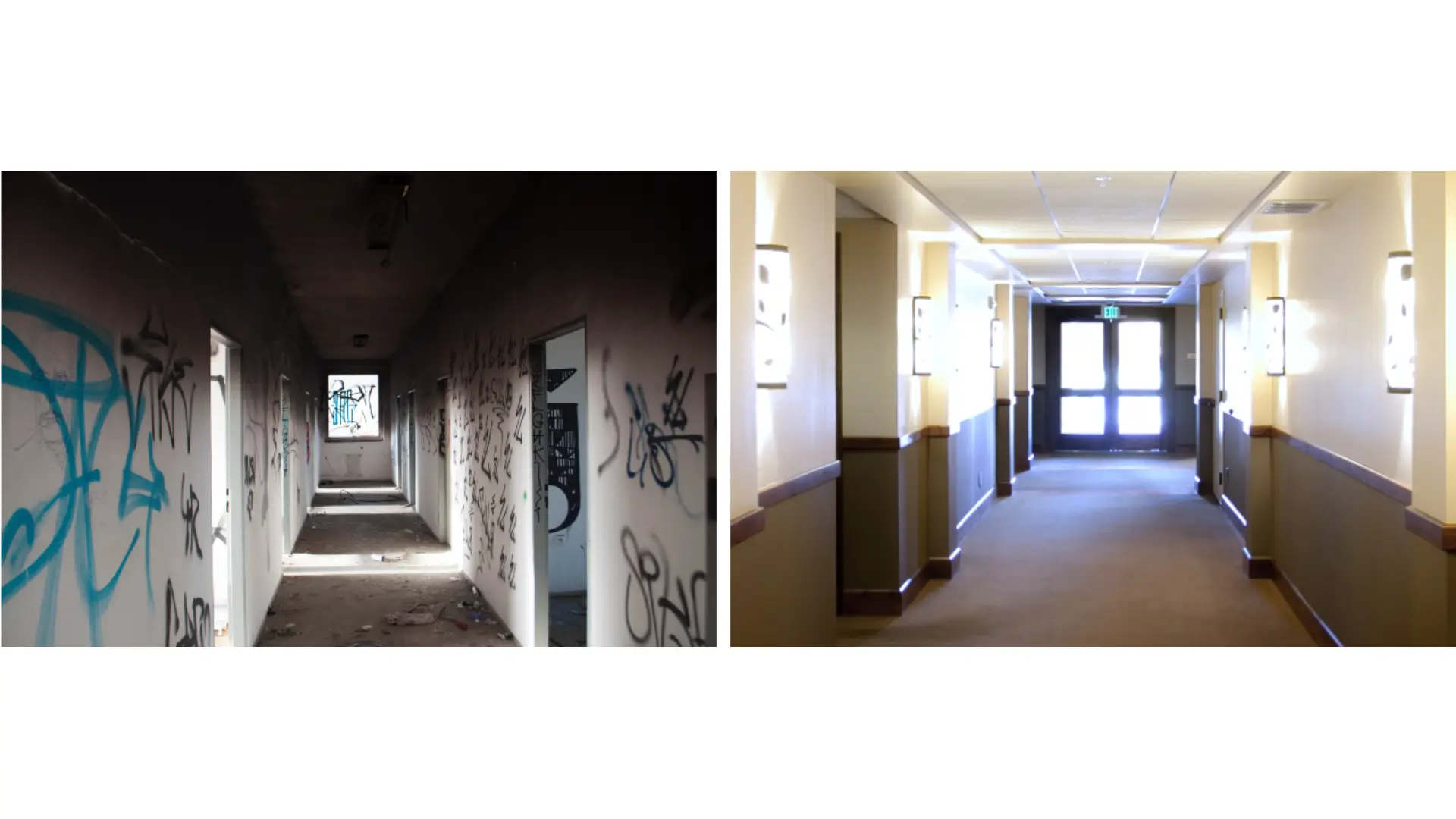
Buildings can deteriorate. Equipment can become unusable. Licenses can expire or be lost. Employees can leave. Vendor relationships can be disrupted. Insurance and regulatory obligations can become increasingly difficult to manage. And the longer a facility remains closed, the more difficult and expensive reopening may become.
That is where an independent court-appointed fiduciary can potentially serve a critical function.
What an Illinois Receiver Can Bring to a Distressed Situation
For property owners, lenders, creditors, investors and other stakeholders, an experienced Illinois receiver can provide an independent layer of oversight when the parties themselves cannot agree on how an asset should be preserved or managed.
Depending upon the court’s order and the circumstances of the case, a receiver may be responsible for functions such as:
- Taking control of property and assets;
- Preserving and protecting physical assets;
- Evaluating financial records and obligations;
- Managing revenues and expenditures;
- Coordinating with creditors, lenders, landlords and other stakeholders;
- Addressing urgent maintenance and operational concerns;
- Evaluating contracts and vendor relationships;
- Reporting to the court;
- Developing information necessary for a sale, restructuring, refinancing or other disposition; and
- Preserving the value of an enterprise while the underlying dispute is resolved.
The specific authority of a receiver is always determined by the court’s order.
That last point matters.
A receivership should not be viewed as a generic solution that can simply be imposed on every distressed company. It is a judicial remedy, and its usefulness depends upon the nature of the assets, the legal dispute, the parties involved, the court’s objectives and the receiver’s authority.
A Receiver Does Not Automatically Mean Reopening
The Weiss and West Suburban situation provides another important lesson.
When Cook County Judge Patrick Stanton announced plans for a receiver, reporting emphasized that the receiver’s immediate responsibility would be to secure the hospitals’ assets. The appointment did not guarantee that either hospital would immediately reopen.
That distinction is fundamental.
Preserving an asset and restarting an enterprise are two different assignments.
A receiver may first need to determine exactly what assets exist, their condition, what liabilities are outstanding, what regulatory requirements must be satisfied, and whether the business can realistically be operated.
In a hospital setting, that due diligence can be extensive.
The latest settlement reinforces the point. Insight Health Systems is taking over management, but the hospitals still face requirements before reopening, including regulatory and licensing issues. CBS Chicago reported that Weiss needs its state license restored and that both hospitals face additional requirements involving accreditation and federal funding eligibility.
The Importance of Independence
Perhaps the most important theme in this dispute is independence.
When ownership and management are aligned, decision-making can be relatively straightforward. When ownership, management, landlords, lenders, creditors and other stakeholders become adversaries, however, every decision can become contested.
Who controls the bank accounts?
Who has authority to spend money?
Who maintains the property?
Who negotiates with vendors?
Who communicates with employees?
Who protects records?
Who preserves equipment?
Who determines which obligations should be paid?
And, perhaps most importantly, who can make those decisions without being perceived as advancing one party’s interests over another’s?
An independent receiver can provide the court with a neutral mechanism for answering those questions within the authority granted by the receivership order.
The Bigger Lesson for Property Owners and Creditors
The dispute should also attract the attention of commercial property owners whose tenants operate businesses that are financially or operationally distressed.
A property may have substantial value, but its value can be compromised rapidly when the operating business fails.
Healthcare properties illustrate the issue particularly well, but the principle extends to hotels, senior living facilities, industrial properties, retail centers, multifamily assets and other specialized real estate.
When the operating tenant stops functioning, the property owner may face competing concerns: protecting the physical asset, preserving revenue, enforcing contractual rights, dealing with unpaid obligations and determining whether the business can be stabilized.
Receivership may become one potential mechanism for addressing those competing interests.
What Happens Next?
The September settlement represents a major change in the legal landscape surrounding Weiss and West Suburban.
Ramco bought out Resilience Healthcare, while Insight Health Systems is taking over management. The agreement ended the immediate ownership conflict that had driven much of the litigation and eliminated the need for the contemplated court-appointed receiver.
But the operational challenge remains.
Insight has said it will conduct a careful assessment of both hospitals before determining the appropriate path forward. Reporting indicates that reopening will require substantial work and cannot be assumed to happen immediately.
That is precisely why receivership and the professionals capable of serving as receivers, deserves more attention in Illinois.
A receiver is not simply someone who steps into a troubled business and “runs it.”
The job requires understanding the court’s mandate, protecting assets, maintaining accurate records, communicating with competing stakeholders, identifying operational priorities, managing risk and providing the court with reliable information on which future decisions can be based.
In a complex distressed-asset situation, neutrality, organization, financial discipline and practical management can be as important as legal knowledge.
A Role Built Around Preservation and Accountability
The Weiss Memorial and West Suburban experience is still developing, but it demonstrates how quickly a commercial dispute can evolve into a much broader asset-preservation challenge.
When businesses fail, the question is not always simply who is right and who is wrong.
Sometimes the more immediate question is:
How do we preserve what remains while the parties resolve their dispute?
That is where receivership can have a meaningful role.
For Illinois courts and stakeholders confronting distressed real estate or operating businesses, an experienced receiver can provide an independent bridge between litigation and practical asset management, protecting property, organizing financial information, stabilizing operations where authorized, and helping the court determine what comes next.
The events surrounding Weiss Memorial Hospital and West Suburban Medical Center demonstrate that receivership is not necessarily the final chapter of a distressed enterprise.
Sometimes, it is the mechanism that creates the opportunity for the next chapter.
About the Author
Arthur R. van der Vant is an Illinois receiver focused on court-appointed asset management, preservation, stabilization and oversight in complex distressed situations. This article is intended for general informational purposes and does not constitute legal advice or an opinion regarding the merits of any party’s claims in the Weiss Memorial Hospital or West Suburban Medical Center litigation.